






Biography バイオグラフィ
Beginning
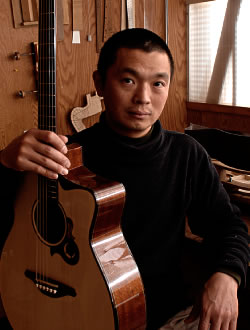 1965年富山生まれ。北アルプス立山で山小屋を経営する家庭に育ち、子供時代は専らスキーに明け暮れていた。スキーというスポーツは道具を駆使するスポーツと言える。そのため、スキーという道具に対して興味を抱き、自室は勉強部屋ではなくスキーをチューンナップするためのテーブルが占拠していた。
中学生の時、姉が買ってきたフォークギターを取り上げ弾き始めるがやはり道具としてのギターへの興味を持ち、高校一年生の時ヒデオ・カミモト著「完全なるギターリペア」と出会う。当時日本にはこの種の本は他にあまり無かったように思う。私をこの仕事に導いた書であった。
高校卒業後、6年間茶位幸信氏の下でクラシックギター、ヴァイオリン等の製作を学ぶ。1990独立、屋号をSUGI CRAFTとしてスタートする。アコースティックギターを専門に製作活動を開始するも製作家としてきっかけがつかめないまま月日が過ぎる。
1998頃ネックジョイントをスパニッシュ工法にする等クラシックギター製作からのアプローチを試みた事が注目され始め後に中川イサト氏、伍々慧氏などが使い始めるようになった。
My Teachers
2002年アーヴィン・ソモジのセミナーに参加。ギター製作と兼業している山小屋の仕事が最も忙しい時期である事を押しての参加だった。一週間のセミナーはより良いギタートップ板の作り方、またその考えの導き出し方であったが、それは全ての物事に対する思考法へのヒントでもあったと思う。
その後ギター製作全般に関して、また製作家として精神面においてどう取り組むか方向性を見出せるようになってきたという点で、これほど多くを教えていただいた人はアーヴィン・ソモジと、あとは恩師茶位幸信だけである。
一週間のセミナーでのアーヴィンの言葉をヒントに製作活動を続けていく中で、次第に振動に対するネックの動きに注目するようになる。そこで辿り着いたアイテムのひとつがベータチタンを使ったトラスロッドである。
軽量でバネ性に富んだこの素材を利用してトラスロッドを作っている事は、外見からは分からないが、重要な特徴のひとつであろう。
 My Style
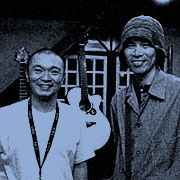
2003年大阪ドルフィンギターズ依頼による「Dolphin I」製作を通じ、デザイナー藤尾しんじ氏と出会う。異業種交流、共同作業に大いなる可能性を感じ、再び手を組む。議論と試作を重ね、1年半後の2005年「Carrera SJ」を発表。翌2006年「Dolphin II」。いずれも藤尾しんじ氏との共同作業である。
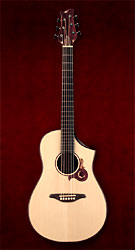 2007年ギター製作に対する自分の想いをより深くギターに反映させるためメーカー名に自身の名を冠した、SUGITA KENJI Acoustic Guitarsを新たにスタート。Carreraシリーズを中心として更に細部まで徹底した作りを目指す。
2008年最新作は「Carrera O-14」。 340mm幅のスモールボディは弾きやすく音量も十分である。まもなく「Carrera D」に弦長645mmのモデルを新たに追加する予定。更にはナイロン弦ギターの開発など、いくつかのプロジェクトも進行中である。
My Life
また、ギター製作と並行して、夏の3ヵ月間は北アルプスにて家業として受け継いだ山小屋を経営しているため、3人のスタッフと共に忙しい日々を過ごしている。私にとっては、大自然の中に身を置くことが心身にとって大きなプラスとなり、それがギター製作に向けるエネルギーになっている。